2021 #4: Peg’s Letters ‘from’ Lesotho (#134)

2021 #4: Peg’s Letters ‘from’ Lesotho (#134)

Lumelang,

I hope all is well with you and your families. Although our new-normal is still months away, we have lots to look forward to – especially the hugs! My vaccine is scheduled for 5:51PM Easter Sunday – an odd day and time but I am thrilled. More friends and family members get vaccinated and we celebrate. It won’t change our habits yet but is very reassuring on a personal and national level.

Non-profits in Canada and organizations in Lesotho have been struggling and many will not recover from this year. Our donors have generously and graciously allowed us to manage throughout the year and still provide a staggering number of services to the people we serve. Thank you so very much. Words fail me in conveying how much we appreciate your support.
We finally installed the long-awaited replacements for our 11-year-old, well-loved and worn playground equipment at both our leadership centres! The volume of kids we have is extraordinary. The old structures gave great joy to thousands of children and are now being donated to nearby day cares. Although ordered many months ago, the pandemic delayed the arrival of the new equipment from South Africa. We are so keen that young people have a few healthy, fun things to do – their lives are so filled with worry and troubles. We are also wanting to set up an obstacle course in our adjacent property for youth, team building and possibly renting it out to generate some small revenue. It will cost about CAD $16,000 installed – which is a lot but we will pick away at the funding – as we did for the play structures. I know that if we install the obstacle course, so many of our program attendees will enjoy it as well – such a great stress reliever.

Today, our GIRL4ce program ran a special day at the Hlotse Centre for our leadership and computer program participants. The day began with a session on contraception types and use, proper use of condoms, HIV prevention and treatment, and STI education. After discussion and time to process, a tent was set up for private HIV testing and a mobile clinic arrived, staffed by a nurse, for STI screening, counselling, and distribution of contraceptives.

Our program officer, ‘M’e Palesa, said that both our male and female youth are so appreciative of the services coming to them on our property – where they are taking their programs. It has reduced their shyness to ask questions, get tested and seek medical advice in a confidential manner. She also noted that this has increased the positive peer-pressure to be open and participate in these opportunities.

I just read a message from one of our kids: “I am so hungry I am shaking.

I worry about these young people. I am concerned that they might lose hope during this endless pandemic and its restrictions so I am trying to connect with as many as I can. Today I would like to share the stories of three resilient young women who give me hope for Lesotho’s future. One of our alumna, LINTLE, whom I last hugged 13 months ago at our alumni reunion event, is now one of our new psychosocial support interns and participating in the annual leadership program going on right now. I will introduce her but do watch the Zoom chat we had on Monday (below). I first met Lintle in 2009 at our leadership camp.

Lintle was a sponsored child from a remote village in Thaba Tseka very high up in central Lesotho. She shares more of her childhood on the video but suffice it to say that this single-orphan had no hope of attending high school. After her father’s death, her mother struggled to raise and provide for eight children until she succumbed to severe diabetes.

Lintle was thereafter raised by her grandmother. She told me that our camp changed her forlorn 12-year-old little girl’s soul. She has been ever grateful for the stationery, uniforms, shoes and school fees which allowed her to graduate from high school in 2014. Lintle worked as a nanny to save for university from which she graduated in 2020 with a Bachelor of Social Work. She immediately volunteered in numerous places:
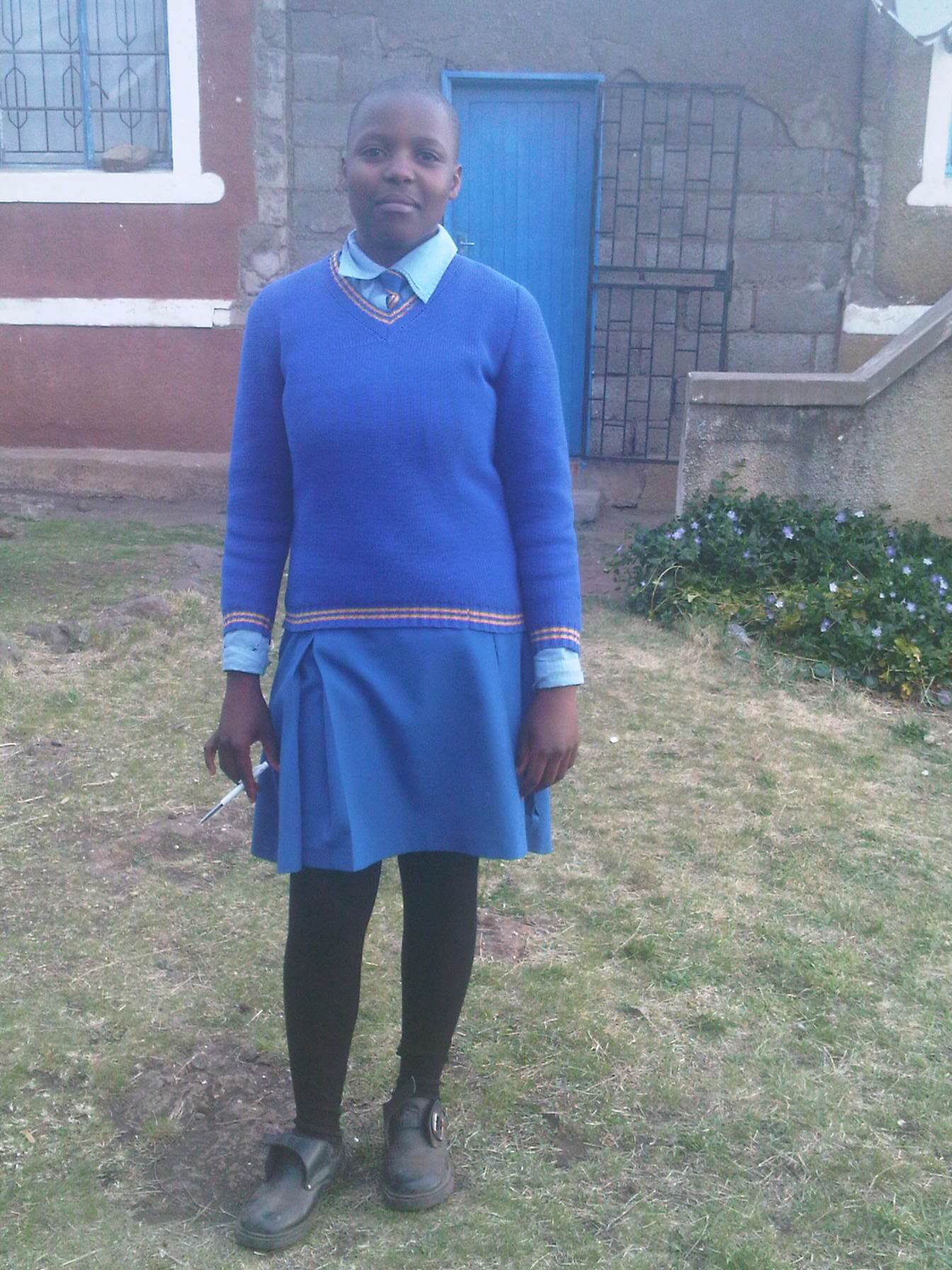
Lintle in front of her house

“I am very grateful that my dream of helping others is flourishing. Now that I was chosen as a Psychosocial Support Intern at Help Lesotho, I feel blessed to return to my Help Lesotho Family to learn to effectively help my fellow brothers and sisters. I know what it means to be vulnerable. The sessions in our training and the LIT program are so thought-provoking, especially the topic of resilience hit home for me. I faced and overcame many challenges from childhood and I learned that those experiences strengthened my resilience. We explored the dangers of blaming and fostering anger and actually how to start taking responsibility for one’s feelings and decisions.”

Peg and Lintle catch up on how she is doing and what her plans are for the future.

Many of you will remember FELLENG who came to Canada to celebrate our 10th anniversary in 2014 with Queen ‘Masenate and Princess Senate of Lesotho – some of you even housed her! I met Felleng in 2009 when she joined our first group of 25 Basotho Girls’ Leadership Corp.
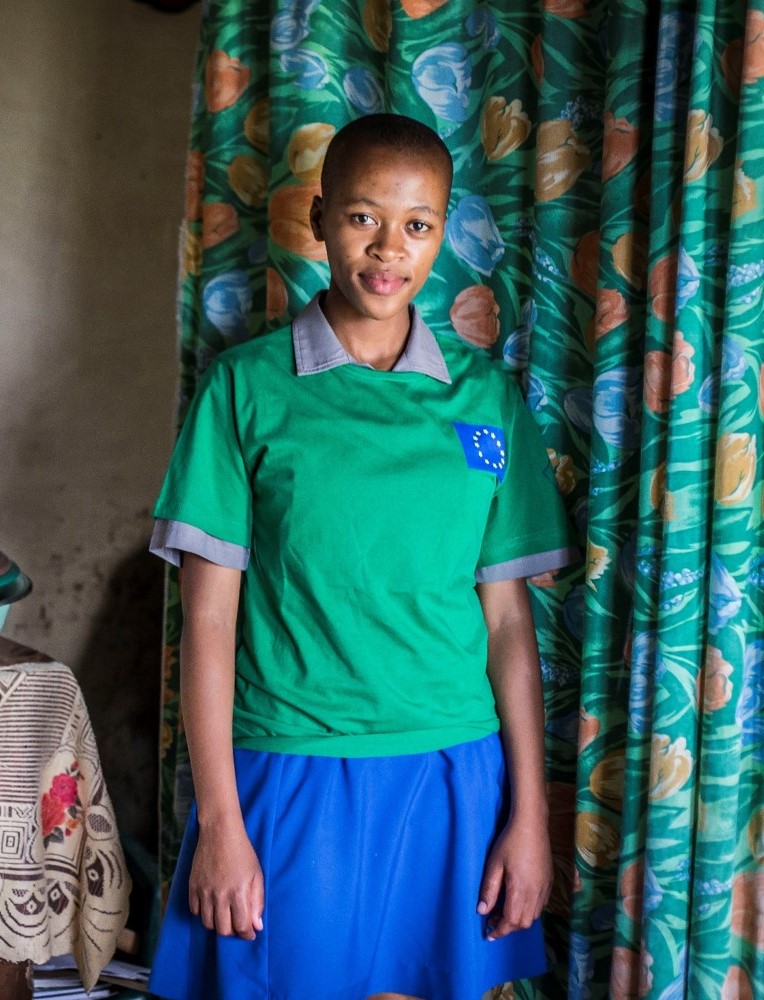
Lintle in front of her house

These tiny 12-year-olds lived above a Catholic church hall – crammed into two small rooms for a whole year while we waited for their dorm at the Hlotse Centre to be finished. I visited them often, more than a little concerned about their well-being. Their housemother cooked on an open fire in the parking lot below.

I saw this painfully shy young girl, with no father and a mother who worked in a garment factory for $4/day, blossom into a top student who took on leadership at school, at church and within the girls in the program. I am deeply aware of her struggles, the many times she grew so thin at university because she had no food, the desperate loneliness when her mother moved to South Africa to find work.

Felleng was 16 when she came to Canada with her Queen and the Princess to meet donors and give speeches on our anniversary theme of gender equity.  What an incredible experience – to cross the globe, fly for the first time. She and the princess were about the same age – game for this adventure but both shy. It was the Princess’ first international trip as well. Felleng was petrified to speak at fancy public venues and stay with strange white families, but she faced it all and did an amazing job. It was months of preparation and anticipatory anxiety and then additional months of recovery and processing but she did it! Felleng wrote me last week:

“I am 23 years now, ‘M’e.  I am still every grateful to Help Lesotho and will always be, because it is the reason I could graduate in 2020 with an honours in Public Administration and Political Science without being pregnant or married unlike so many of my age mates. Because you asked, I will share that life after university is very challenging and COVID 19 has things even worsened matters.

I have not given up even during these hard times. I apply for every relevant job post that I come across. I want you to know that the advocacy passion has not died in me. I work very hard to improve my advocacy skills through volunteering. I am currently a member of United Nations Youth Advisory Panel in my country. I am also volunteering with Help Lesotho’s new Alumni Village Outreach Project. As you know, I have travelled to Canada, South-Africa, Ethiopia and Kenya representing young people in Lesotho. I am very grateful to Help Lesotho for having given me the opportunity to study and skills to represent and advocate for other young people. I can speak without fear, I can reason and represent my country because of the confidence that Help Lesotho built in me. So many girls are not so lucky. I always thank God for directing this precious organisation into my life and pray that it grows bigger than it is. I am a proud and grateful alumna.”

My final young woman is 23-year-old ITUMELENG, a GIRL4ce member. She is one of the leaders of the ‘Do the Right Thing – stop gender-based violence (GBV)’ Blitz that happened before Christmas that I mentioned in my last letter. Itumeleng graduated from high school in 2016. Before joining GIRL4ce in 2018 she had a little business selling handbags and watches. For the last two years, she has devoted herself to fighting the high and alarmingly increasing rates of GBV as more and more girls have no one to protect them.
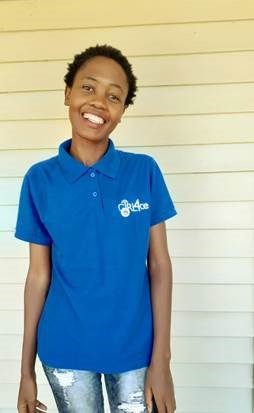
“The COVID-19 pandemic has really affected us. I so miss being with my friends. I am using the pandemic to save money. We have all learned better hygiene practices and more respect for personal space – which is good. I wear a mask all the time and wash my hands every 20 minutes and keep two meters’ distance.

What is not good is the loss of jobs, the curfews and restrictions and occasional total shutdowns. Many have lost valuable time in their studies and online learning is a struggle due to lack of adequate computer skills and poor technological infrastructures in the country, i.e. absence of electricity and internet connection in remote areas.  The endless closure of schools gives rise to more teenage pregnancy and early marriage. We already experienced so many deaths!

The blitz was the best experience ever, going out to people hearing their opinions on GBV and teaching them was quite fun and educational on both sides. The pandemic is affecting GBV, the rate of violence is accelerating at a very high rate, primarily domestic violence because of congestion in households, due loss of jobs and closed schools. People who participated or received our message come back to Help Lesotho to report cases of GBV in their villages.

During and after the Blitz, we had a strong response on social media, which shows people understood our message and are willing to partake in our initiative. Some men shared our views while a few tried to justify their actions of violating children’s and women’s rights. Some used culture and customs to validate their behavior but the majority seemed to appreciate their errors and promised to work towards repentance.”

My heart bleeds for these kids – they are all trying so hard. I often think there is a huge lesson here of how grateful and determined young people can be despite having so little.

We have so much going on that I struggle to limit these letters. The interest you show is incredible and truly appreciated.

Be well, be safe and be kind,

Peg

2021 #3: Peg’s Letters ‘from’ Lesotho (#133)

2021 #3: Peg’s Letters ‘from’ Lesotho (#133)

Greetings,

As the light and air in Canada offers a promise of spring, Lesotho days begin to shorten on their way to autumn. The longing world waits with baited breath for vaccination coverage and some semblance of normality. It has been an eternally long year.

March 9, Lesotho received AstraZeneca Covax doses from India. Schools are beginning to open; our programs are resuming all over the mountains, under guidelines of course. Everyone has renewed hope.

If you are in need of a ‘boost’ (who isn’t?!), check out the video of our staff choir singing a beautiful song we posted on our Facebook page this morning.

One exciting piece of news is that our beloved annual six-week Leaders-in-Training (LIT) Program was able to start this week with the restrictions lifted. I gave my usual welcome session to 50 fine youth on their first day via Zoom. I am disappointed not to personally welcome the new group to the Help Lesotho Family for the first time, but grateful that technology still allowed me to connect with them for 90 minutes. All these years, I would never have imagined that virtual sessions would be possible in rural Lesotho!! Even through my computer screen it was touching to see them so anxious to learn and grow. Gosh, it is hard to track their reactions with masks on!

LIT is our most elite program of young tertiary graduates who display leadership motivation and potential. Following their progress through the program and beyond has always been a pleasure and I will do my best from this distance. Among this group are two young men and two young women with social work and psychology university degrees who are beginning a special internship in psychosocial support to build our capacity to help more people. This kind of training takes a long time and a serious focus. They will take LIT, do online courses on our proprietary platform, have mentoring sessions and complete many assignments. They will have practicums in the field, followed by training and certification as CHANGE4ce Facilitators to deliver our program modules. I will personally invest significant time into building their psychosocial support delivery skills. Developing young leaders is our purpose, our expertise and our joy.

This morning the group had their ‘Grief and Loss’ session. I always feel conflicted about this. Every year, I keep vigil while the session is going on. These dear young people, coming to the Centre with spit and polish, hopeful they will make new, quality friends, trying so hard to grow up. But this day, like no other, they face the layers of desperate loss and anxiety they have carefully hidden deep in their souls. The accumulative grief from the loss of loved ones, opportunity, intimacy and trust is brutal and my heart breaks for them. Our senior staff facilitate this session, while others are stationed around the room and the property to support the outpouring of emotion, however it manifests. I have written about this many times but the impact never leaves me – or them. They cannot move on without lifting this burden; yet facing it is tortuous before it is liberating. Torrents of tears; visceral deprivation of comfort and tenderness over their lifetime; memories buried deep in their emotional tomb rise up. There is so much loss from AIDS, TB, and now COVID. Many of the grandmothers died this year – grandmothers who have raised and loved these fragile young people and with whom they have their strongest emotional bonds. They grieve not only for the loss of their loved ones but how those losses have altered their lives for the worst. Many feel unloved. Most are suffering from a growing depression from too much isolation, not enough support and pervasive doubt about what will happen next. Most broke down in tears and some fainted. If you are the praying type – please join me in praying for their healing and their precious time of growth in this program.

Although there are many stories, here are a few from this morning:

  • One young woman shared: “My father died when I was nine. After that, my mother turned to an alcoholic. Instead of her taking care of me as a child, I was the one taking care of her. I would go to the bar after school, sit with her until she was done so we would walk home together. This was a life routine for me as a child. At the same bar, there were teachers, who happened to be my teachers when I proceeded to secondary level. It felt embarrassing being taught by someone who knows the darkest secrets of my family. I would always be humiliated being with my mother at the bar with my teachers in the same room.”
  • A young man blurted out: “I had a very tough life growing up. My grandfather played a very important role in my life than my father. He would always tell me stories than encouraged me. I remember one day at secondary. I did not have any shoes, I had to wear my grandfather’s shoes to school.  I was a laughing stock due to those shoes, so out fashioned and old. I did not really understand until he died. Now that he is gone, I feel pained because he will not see my successes.”
  • One young woman lost both parents when she was eight. “Then my grandmother moved in with us for a year. After that, she missed her own home so we moved there. We couldn’t stay with her any longer so I ended up being raised in different families and I felt I had no home. I miss my parents dearly. I always tell myself that someday, when I have a job, I will build the same house as my parents’ house so that I feel that happiness of being home.”

This is our work – careful, loving, deep and transformative.

As you may recall, we operationalized our first nation-wide ‘blitz’ to target gender-based violence (GBV) in Lesotho from November-December 2020, to help community members, such as teachers, chiefs, mother-in-laws, boys and men understand their participation in and/or responsibility for turning a blind eye to GBV. The already alarmingly high rates of GBV skyrocketed in 2020 as a direct result of COVID-19 lockdowns. There is also ample evidence of increased incidences of child marriage as a coping mechanism in emergencies.

We used the opportunity to pivot from our usual intensive in-person training model to a much broader campaign with the simple message ‘Do the right thing – stop GBV’!

The month-long blitz campaign was youth-led by our GIRL4ce team and included 12 radio shows, 5 billboards, 3 newspaper ads, 5 community exhibitions, high social media engagement, an essay and poetry contest, thousands of distributed brochures and buttons, and a catchy GBV song. We can safely say that we reached more than 70,000 people through this initiative. We have heard from many who said that it enabled them to start conversations within their families and communities. GBV is so pervasive because it is normalized and accepted…changing social norms takes time, but we are committed to doing everything we can to turn the tide.

The GBV essay and poetry contest was great fun. We received dozens of impressive submissions. Picking the four winners was not easy! The winners had their entries published in the national newspaper and received smartphones. You can read the full entries on our blog here.

Following the Blitz, I wanted to hear how the GIRL4ce team was doing. As an edu-tainment troop focused on stopping gender-based violence and child, early and forced marriage, these young people need support as they address these heavy issues every day. 

The ‘bride’ in the drama on child, early and forced marriage, Thato Chechile, shared her journey in the program:

“I stayed at home for two years after graduating high school with no funds to further my education. Life was so hard and I was struggling. I joined Girl4ce in 2018, whereby I learned so much. I took on roles in our dramas and helped new members with their characters so that our performances shine. I facilitated sessions in the communities and did radio shows.

COVID-19 really affected us a lot. When we were unable to perform, we took short videos to post on our Facebook page and continued the radio shows to pass our message. People liked the social media posts. We shot a music video of the song performed by well-known artist Selimo Thabane and this really helped improve our skills and performances. Listeners were so impressed that youth want to see a change in our country. Once we started talking, our listeners were agreeing that GBV is constant in their communities and action needs to be taken to stop it. Most impressively, many men said they are against GBV and signed pledges not to violate women and children and agreed to report to the chief or police.

COVID-19 is a tragedy to most of Basotho. Everyone is affected, both young and old. The education system is disrupted, early childhood education is affected, there are no preschools which are the foundation of early development in young children. Without school teenagers have no way to learn and this may lead to high rate of misguidedness leading to drug use and every other problem. When we look closely into matters such as GBV, many women and children are forced to stay at home with their abusers all day without any escape through school or work. Most women are stuck at home with their partners who have nothing better to do than to beat their spouses up. Financially speaking, most families are in bankruptcy. They can’t afford necessities and this lead to high rate of teenage pregnancy and early marriage whereby young girls think marriage is just the solution to their problems. I see this pandemic destroying people’s future.”


As I check in on staff and their program participants, I heard the plight of one of the young mothers, Moratuoa, who is currently being attacked by family members trying to inherit her deceased mother’s house, saying she is not entitled to inherit any property because she is female. They have already taken her small fields and refuse to share the produce with Moratuoa and her child. Her chief is supportive so far, allowing her and her little five-year-old girl Nneuoe to stay in the single roomed house, in which the kitchen and bedroom are separated by only a white curtain.

Moratuoa survives thanks to the income she generates through the small business she started with support from the Young Mother Program. This past year has been tough. Most of her customers lost their jobs – no one is buying. Most families in her village go to bed hungry.

‘M’e was thrilled to get a M400 (CAD $33.75) voucher from Help Lesotho to buy more items for her shop. She is earning just enough to feed the two of them, pay her funeral insurance and the fee for her daughter’s crèche while she works. Because of this business, she can manage. She thanks all donors supporting the Young Mother Program so much for helping her learn how to manage her life and provide for her daughter.

Moratuoa mentioned that she used the strategies from our Grief and Loss session to deal with the loss of family members during COVID. She said:

“I cried a lot and I felt relieved. Some people told me not to cry but I did because I am aware that it is one of the healing strategies”

Indeed, lots of challenges but amid them is hope and determined effort to make each life better. So much has happened behind closed doors this year. It is our task now to unpack it all and help them move on. I wish I was there to give out a few hugs – mask and all!

Thank you for allowing us to continue this work so adaptively during the pandemic and under arduous conditions.

PS: For those interested in how climate change is affecting Lesotho, a substantial, and frightening, report was just published and it concludes: “We estimate that climate change decreased the number of farming households in Lesotho that were self-sufficient by 50%. It decreased household purchasing power by 37%. It’s important to note that climate change exacerbated an already vulnerable food situation of the country. Agriculture production has been declining for years due to soil erosion, poor land-use practices and decreasing soil fertility. Hence, climate change may push Lesotho’s already precarious food security over the edge and make it unsustainable during drought years”. Click to read the full article.

Read the previous ‘Letter #2’

Read the next ‘Letter #4’

2021 #2: Peg’s Letter ‘from’ Lesotho (#132)

2021 #2: Peg’s Letter ‘from’ Lesotho (#132)

Lumelang,

Thank you for your responses to my last letter. I so appreciate your interest and encouragement.

As I write my second letter ‘from’ Lesotho of 2021, it is -30 degrees C in snow-enveloped Ottawa and a sunny +24 in late-summer Lesotho. Our worlds could not look or feel more different and yet, for the first time in my experience, be more similar in some respects. COVID has turned us all inward toward self-protection, wariness, and concern. We share the experience of living with an unusual and uncomfortable ambiguity – a longing to be free from this cloud, jointly binding us in our concerns for our physical and mental health.

Cosmos flowers in bloom on a sunny late-summer day in the mountain kingdom.

Breaking news just in this morning – Lesotho will receive its first batch of COVID-19 AstraZeneca vaccines through the Covax initiative this month, enough to cover 3% of the population. Although it will take a long time to reach our beneficiaries, this is a concrete start. We are hopeful!

After the staggering number of deaths attributed to COVID-19 following the pre-Christmas influx from South Africa, there has been a puzzling and rapid decline in reported mortality and incidence. Lesotho is progressively opening up and we are resuming portions of active programming within the current guidelines. This week the Ministry of Education announced the schools will open after almost a year and all children will be promoted to the next grade. It will be several weeks/months before the schools fully open, but we are thrilled that students will be able to finally resume their studies.

COVID has flipped the typical communications somewhat. Normally, our activities focus on helping others, but over the past many months, literally hundreds of donors and beneficiaries have reached out to us to see how we’re doing and to encourage us! Little notes, cards, phone calls and text messages come daily. On the Lesotho side, you might be surprised to know that most of our communications with our beneficiaries are about appreciation. Of course, there are heartbreaking pleas for jobs, volunteer or internship opportunities, or food for their starving babies, but the percentage is much smaller than you might imagine and always with humility and gratitude: “Are you OK ‘M’e Peg, please thank all the people who help you”. There is Ntate Thabang, a villager in Pitseng, who does not benefit in any way from our programs who regularly sends me quick notes of thanks for all we are doing for his people.

One of my favourite things is hearing from our alumni. They often write emails, notes on our Facebook posts or send DMs on Twitter (@pegherbert or @helplesotho). They want to tell us how they are doing because they know we are wondering.

Motheba, a young woman I knew well while she attended high school, wrote a letter with ‘then’ and ‘now’ photos, in hopes that it would reach her former sponsor (who was, as you can well imagine, delighted to hear from her Basotho daughter after many years). It made my day to see the photos. Hearing of Motheba’s determination to create a better life for her and her daughter gives me so much hope. (Know I only share stories when I have permission. In general, alumni love to share.)


Dear Mary Stewart (of Kingston, Canada),

I am sorry we have lost touch. I was buying my uniform for my midwifery course and met a Help Lesotho staff. I was so excited to think I might reach you. I graduated very well from high school in 2015 and then graduated in nursing. I will be forever grateful to you for shaping my future.


I am really passionate about nursing and caring for the sick. The prevailing COVID pandemic challenged me to be extra careful and to be ready for unforeseen health hazards. My family and I are doing well, always taking precautions to avoid COVID 19 infection. It’s so sad here in Lesotho. We have lost so many from the virus but I strongly believe the vaccines will save millions of lives. I now have a beautiful 9 years old daughter, Refiloe, Fifi for short. Her dad left us when I was four months pregnant. Our cultural norms and values stipulate if a woman falls pregnant she has to be married. My relatives tried to force me into unplanned marriage but I refused because I believed that I have the potential to turn my weaknesses into my strengths. Surely I deserved a chance to make a difference for me and my beautiful daughter. This is solely inspired by Help Lesotho camps and the programs I attended. How are you doing with your family? I am sure you guys are growing up but still beautiful. I would love to hear.

Love, Motheba

I also heard from a fine young lad, Tsietsi, whom I wrote about 10 years ago, when he had already exceeded the grade seven education of his mother, graduating with first class from Sefapanong Primary School, way up in the mountains of Thaba Tseka. His father was a shepherd. He had come to the school to tearfully say thank you. He declared to all and sundry that his boy was brilliant and that if not for Help Lesotho his son would never be able to attend secondary school. Tsietsi’s family was destitute and hungry. They lived a 2.5 hours walk from the nearest high school. They had no electricity for evening studying. Anyone else would have given up. But not Tsietsi, he was determined to get an education no matter what.  With the support of his sponsor, Nina Thicke, Tsietsi graduated from high school in 2014 against all odds. I have often wondered what became of Tsietsi and his sweet smile. It was a joy to hear from him last week when he shared:

“I am working at Lesotho Defence Force (LDF) since 2021. I am so happy to be able to help my family financially. It is widely known that the military training is the toughest training in the world, but I managed to defeat all training stress that I had. I am now able to help people that are in the same situation about how to manage stress, problems and as well encourage them in their life difficulties. Even during this time of COVID-19, I was able to talk to my fellow colleagues here that we are going to defeat COVID-19.  I got equipped with self-esteem in Help Lesotho.


We have had a year with sorrows and problems in the family. My younger sister had an accident while at university. I was unemployed together with the whole family. We had all lost hope of her life. With God’s faith, she is alive even though she is disabled at the lower abdomen. If it was not because of Help Lesotho, I would have run mad. Help Lesotho equipped me with all life skills, helped me with school fees and at home as well. I am now a proud soldier of Lesotho. I am speechless with thanks.

Tsietsi in 2021.

It is humbling and inspiring to read their stories. These young people are brave to handle so much adversity with thanks and grace. We can’t solve all the problems in Lesotho and we can’t help everyone with their multitude of issues but we are making a lasting difference. Truly, the measure of our overall impact is in the longevity of the maturity and coping skills they learn with us and are able to apply during challenging times.

Aren’t you proud of them?

In closing, I am ever more thankful for the lack of bureaucracy and impediments in our organization, which allows us to pivot immediately, plan contingencies and operationalize new strategies within days. I realize this is much harder or even impossible in larger NGOs. Our supportive and flexible board of directors, donors, partners and staff are all of accord. This unanimous focus has been key to the initiatives we have employed over the past year – and which have deeply assisted thousands of people in desperate need.

I send each one of you a hug and my wishes that you are safe and well during these long, difficult months.

Thank you for reading and for caring.

Read the previous ‘Letter #1’
Read the next ‘Letter #3’

2021 #1: Letters ‘from’ Lesotho (#131)

2021 #1: Letters ‘from’ Lesotho (#131)

Greetings
to our Help Lesotho family,

Instead of
sitting in a short-sleeved summer dress watching the early morning southern
African sun drench the land, listening to the tinkle of the sheep and cow bells
outside my window as I write, I am watching snow fall, ever-so-gently from my
home in Ottawa.

For those who follow our work, you know that this is the first time in 17 years that I have not spent January-March in Lesotho. Each trip, I have written five or six letters ‘home’ detailing the adventures, challenges, meetings, and people in my days. In the first decade of the organization I would make more than one trip, spending four-to-five months each year in Lesotho – more letters home. The letter you are reading now is #131! These epistles not only chronicle my time there, but capture the history of the organization and act as a vivid testimony to the resilience and character of the Basotho people as they faced the HIV/AIDS pandemic, poverty, government instability and grief.

Although COVID prevents me from being in Lesotho this year, I will write my letters to continue our story. I am in touch with our local staff daily and regularly catch up with alumni from our programs, friends and colleagues in Lesotho. I feel they need this voice right now, maybe even more than ever.

For those who read about my harrowing journey back from Lesotho during the infamous third week of March 2020, you know that I was filled with déjà vu that this unknown virus could decimate Lesotho in the same way I witnessed in 2004 from HIV/AIDS. Then, life expectancy was a grim 34 years; there was no ARV treatment outside the capital city, fear, misinformation, terror and denial were rampant.

In the letters I write now, I want to share how COVID has affected Lesotho and how our staff and beneficiaries are coping. I will share their stories and our responses, the challenges and progress. We have spent 17 years building the quality and expertise of staff and programs to create a critical mass of young people who can lead the way forward. We are extraordinarily well placed to help during this period in Lesotho’s history. We are not helpless.


In our efforts to keep beneficiaries safe, we employed local seamstresses to create a ready supply of masks.

Thank you
for reading along with me and being a witness to the grannies, young mothers,
herd boys and children in this mountain kingdom we all care so much about. To
begin ….

In March
2020, Lesotho was quick to shutter its 14 border posts to South Africa and lockdown.
It worked. Lesotho was among the last countries in the world to report cases of
the virus. Yet, almost a year of restrictions has decimated the economy –
businesses failed and those selling vegetables on the street have had no
income. The small businesses of our young mothers collapsed as they had to
either eat or sell inventory to survive. The most common and desperate problem
was starvation, especially over the winter of June to October.

In the end, the first nine months resulted in very few cases. The familial pull of Christmas changed everything. Over 130,000 migrant workers crossed the newly opened border to return to their home villages from South Africa – bringing the South African variant with them, spreading it immediately throughout the country. Panic. This was what we feared all along. January 13, 2021, Lesotho issued a ‘Red Alert’ lockdown – schools closed again (immediately after they re-opened January 4th for the first time) and businesses shuttered. Social/family gatherings restricted. All gatherings, including church, prohibited unless COVID-related. 7PM-7AM curfew imposed. The police and military were deployed countrywide to enforce COVID-19 regulations. Again, it worked. Yet, in the weeks after Christmas, so many people died, quickly without treatment. There was no oxygen supply in the entire country. Hospitals and mortuaries were full to capacity and stopped receiving new patients. Mythical cures proliferated. It is almost impossible to isolate in a crowded hut. Testing was sparse and unreliable. February 3rd, lockdown restrictions were relaxed with infection rates dropping from 47% to 31%. Key transmitting venues remain funerals and church services. February 15th, King Letsie III plead with his countrymen on national TV to stop attending funerals.

A hurricane in southern Africa brought torrential rains to Lesotho in early February wreaking staggering damage to hut roofs, roads and crops. It will cost over CAD $10M to repair the 33 major bridges that were destroyed. February 17th, Lesotho Prime Minister Moeketsi Majoro declared a six-month state of emergency after heavy rains pummeled the country killing a number of people and destroying more infrastructure. That said, enough crops survived to supply families with some vegetables during these summer months.


Photo credit: SA People News

In April, Lesotho is one of the 92 countries set to
receive free vaccines from the COVAX facility (a fully subsidized initiative by
the World Health Organization to give poor countries free vaccines). Should it
arrive, the vaccine they get will have expired in March. COVAX commits to
donating enough vaccines for 20% of the populations of each of the target
countries. These countries, including Lesotho, must find the funds to purchase the
additional vaccines required for the remaining 80% coverage.

During the lockdown we produced an activity book with COVID education, coping strategies and learning activities for the children near our leadership centres. We continue to distribute these simple supplies and are developing more workbooks for various grade levels. The children are beyond happy to have something constructive and interesting to do. They are delighted to have story times in the fields and access to books from our libraries.

You can imagine our worry for the safety and survival of
our beneficiaries. We have been reaching out to them, one-by-one, with
encouragement, strategies and concrete help.

You may remember our amazing alumni-organized reunion
exactly a year ago. It was one of the happiest days I have spent in Lesotho –
to see hundreds of young people filled with hope and determination to make
their country better. I so wished you all could have experienced the profound
and spontaneous appreciation flowing from these kids – for the support they
have received – because of you.

One young leader and organizer of the event I wrote about last year was Likeleli Lekhanya. I have thought of her many times over these difficult months and assumed that the planned June operation to remove the bullet from her spine had been cancelled.  A graduate from our Child Sponsorship Program, Likeleli comes from high up in the mountains of Thaba Tseka. Determined to become a young leader in her country, she graduated from university in accounting under unbelievable odds with the residual disabilities following the shooting.

A few days ago, Likeleli and I spoke on the phone. I wanted to know how she and her friends were managing. Determined not to complain, she shared how youth are struggling. Even with their degrees, there are no jobs. Businesses are failing. They are trying to do online courses but rarely have the data on their phones to hot-spot their computers. They are getting depressed and experiencing mental health issues. Things are getting worse because of COVID but people now know more about the virus and how to protect themselves than they did ten months ago. Her friends are telling parents living in the mountains to wear masks, not to go to funerals, and how to mourn without gatherings. People are becoming more careful now that they actually see so many people dying in their own communities. Although she knows many who have died over these last couple months, none of her close friends got sick.

She reiterated that the economy
in Lesotho depends on street vending. Parents try so hard to help children by
doing piece work. Some schools have online classes but they are not great,
students are failing. Many have no tablets or computers; they try to learn on
small cell phones but it is not effective. They have no internet at home – it
is so hard to research. Many have been out of school for over a year and have
stopped being interested in returning to their education at all.

I pressed her to tell me how she was. She had received a bursary to begin her courses to become a chartered accountant. She is struggling with the funds for data for the online courses and to learn under such strained conditions. Likeleli lives with her mother and two young brothers. Their sole income comes from her mother’s sales of vegetables on the street but that has closed down with COVID. The operation to remove the bullet was indeed canceled – with no new date. They worry if they take it out there may be more neurological damage. She is not in pain, except from cold during winter. That is what paralysis does.

Her voice lifted when she talked about how her faith keeps her going.  “I keep praying a lot – some days I feel so down and wish things were different and wish I could help my peers. That is when my faith helps so much – it is all I have.” Yet her next thought was of you: “Pass my greetings to all the donors, please ‘M’e Peg. I am so excited that you think of me and that I am hearing your voice. I am smiling to talk to you.”

I reached out to one of our supporters who referred me to a CA from Calgary, Sheree Donally, who has enthusiastically agreed to tutor Likeleli through her 18 months of courses to gain her CA. Our hope is that when she is finished, she can get some experience and set up her own business. There is little wheelchair accessibility in Lesotho but this is something she can do and clients can come to her.  I believe in her and know that she is already the kind of leader we work so hard to develop.

Thank you for caring and for
your support – it means the world to us!

I wish you safety and health in
these troubling times. Please reach out if we can help YOU.


Peg

P.S. Here is a helpful link if you want to catch up on my previous Letters from Lesotho.

Read the next ‘Letter #2’

2020: Letters from Lesotho #5

2020: Letters from Lesotho #5

Lumelang,

As I write my last letter about my time in Lesotho in 2020, I am conscious of the juxtaposition we are all experiencing of incredible gratitude for every good thing in our lives and our multi-faceted anxiety for our friends, families, colleagues and global neighbours.

This blog post contains a number of different elements:

  1. CURRENT SITUATION in Lesotho;
  2. OUR RESPONSE update;
  3. MY TIME IN LESOTHO; and
  4. A concluding, very sweet letter a special volunteer wrote to you all.

Thank you for caring about our work when you have so much else on your minds. We appreciate it more than you know.


CURRENT SITUATION

April 13, the government of Lesotho released a plan to infuse money and support into the fragile economy which includes some food relief, small businesses support and some fee relief. How this will roll out is yet to be determined.

The heaviest burdens are fear, famine, gender-based violence and total loss of income. To date, there are still no confirmed cases of the virus. That said, only last Thursday a new lab opened to give the country its first capacity to actually test, financed by a mining millionaire from Lesotho, Sam Matekane. You may have read about the Canadian company, Spartan, that developed quick tests for COVID-19 with results within an hour. This type of testing has been used successfully in Africa for HIV for a decade so hopefully this will be available for African countries soon. It could make all the difference.

Winter is coming – as the nights get longer and colder, the need for kerosene, propane, candles, etc. increases rapidly.How the Basotho hate the cold! There are massive lineups in towns for such purchases. One wonders how it will ever be possible for our beneficiaries to secure such supplies or even pay for them.

Winter in the Mountain Kingdom. Photo credit:https://www.flickr.com/photos/lesotho/7165832201/


OUR RESPONSE

  • The granny food parcel drops went well and the grannies were in tears of appreciation. Many grandmothers have no phones or means of connecting with the world.

  • As mentioned in my last letter, our staff were mobilized immediately to deliver remote psychosocial support to our past and present beneficiaries. In the last two weeks, they have already connected with hundreds of beneficiaries who were deeply moved that Help Lesotho had not abandoned them at this time of crisis. They have shared some feedback from their conversations:
    • Most report high levels of stress. Their ability to earn even a little income has abruptly stopped – no work; no pay. Women have lost the little they make washing clothes or working in the now-closed factories, no buyers for the market/street vendors, etc. They ask how they will eat when there is no money;
    • Police are severely patrolling so people fear going out even for essential reasons such as fetching water, checking on neighbours or visiting the health clinics. Many lack the understanding of why the police are patrolling and are scared;
    • Those without radios or phones are highly susceptible to confusion, myths and misinformation. Those who have access to radio are better informed;
    • Many people are unreachable because their phones have run out of data, or solar chargers don’t work on cloudy days, or those villages high up in the mountains have no service;
    • HIV positive people know that they are at much greater risk but many are not going to the clinic to get their ARV drugs, on which their lives depend, for fear of the police patrols or because they do not have the transport money;
    • Community conflict is increasing between the informed and the uninformed (practicing physical distancing vs not);
    • Many girls and women, especially our young mothers, are stressed by the sexual pressures of male partners, especially those who recently returned from South Africa and are not self-isolating;
    • Our herd boys have no information. If they have cell phones at all, they can only talk in the evening as the phones are charging during the day. They are so happy someone cares to know how they are;
    • Some believe this is the end of the world. “There’s nothing we can do about it.” “We are all going to die”.
    • Our trained young alumni leaders are fairly well informed and trying their best to share our information sheets and facts with their communities and to engage the deniers; and
    • Without consistent, fact-based information, many youth, including some of our grade seven and eight Pearl Girls and Guys4Good, continue to socialize.

  • We are investigating:
    • How we can access more washable sanitary kits as this is an increasing issue for obvious reasons; and
    • How we can help get food and airtime to beneficiaries in remote areas.


MY TIME IN LESOTHO

I left off telling you about the trip to Thaba Tseka with our donors. We really did have a marvelous meeting with the grannies and herd boys in their village. One of my great joys now is seeing the impact of our programs on the relationships between people.

[Staff translation]: When she was too young to remember them, her parents passed on. Her relatives deserted her and her three brothers, leaving these little ones to survive by begging for millie meal from the neighbours. At 15, she eloped, hoping for a new life. When her dear older brother passed, she became the sole supporter, just when her husband returned from his piece work in South Africa seriously ill. No income at all.

Dealing with AIDS and all that entails, she did get a chance – when she was selected for our Young Mother Program and its starter packs. Despite endless effort, her new found ability to provide for herself, her baby, her ill-husband and her younger brothers vanished when her youngest brother was attacked for refusing to go to initiation school. She overcame all this and built a successful little business with her starter money. A remarkable achievement. With her meagre income, she also cares for her cousin and her two children.

“The support I got from Help Lesotho facilitators, my peers and our support network made me a leader, made me feel loved and responsible. My little business now lets me buy food for my family and little brothers. Sadly, I had to use all my starter pack money for transport to take my little brother to hospital and then to the police station to report the case to the police. Due to a lot of responsibilities I am facing as a young woman, it is not easy at all, but I learnt a lot from Resilience and Relationships Modules which aided me to keep my family intact with all the troubles. It was hard at first to express how I feel to my husband, but now I do it with ease, and he is very supportive of me. He also went to the partners meeting which all Young Mothers partners were invited. After that meetings I saw a huge improvement on how he treats me compared to before.” – Makarabelo

Of course, now we worry what has happened to them during this lockdown. No one buys.

It was good to visit Majara School and the new classrooms Help Lesotho is building with funds from one of our previous trip guests and fundraising for furniture by Turnbull School.It is almost finished but I am anxious that the second half of the roof gets completed before the winter sets in. Everything has stopped with COVID-19.

We just launched a new program called Guys4Good, to mirror the Pearl Program for grade seven and eight girls. Unfortunately, the program started a week before the shutdown but will enthusiastically resume at the first opportunity.

The program’s supervisor, Mme Thato Letsela writes:

March 14 we had orientation training for 51 Guys4Good boys and 44 of their guardians. The latter turned up in larger numbers than expected, curious to see what a boys’ program looks like! It was sad to see how little these guardians knew about issues affecting boys. They confessed never discussing issues with them, thinking they were too young. They felt contributing to the boys’ learning was not their responsibility, but rather that of their teachers and Help Lesotho. At the mention of sexual and reproductive health, they were visibly uncomfortable. Through the discussions, they began to understand the relationship between their participation in their children’s learning and growth and the boys’ ability to make healthy decisions as they grow older. The idea of role modelling was totally new to them as well, to realize that the boys will copy their behaviour and that if they beat and insult their partners, the boys will too. They were shocked to realize that they had not been the kind of role models their boys need and had to accept blame if they did not behave. Some male guardians asked to be included in choosing the topics the boys would discuss and even help facilitate some.
After their guardians left, the very popular Self-esteem session with Mme Hlalefo provided a novel opportunity for self-reflection and discussions on positive self-talk. The boys enjoyed calling themselves Guys4good during the session as they felt honoured to have been the selected few to participate in the program.

That Saturday, March 14th, at the same time as these revelations were going on in one room, a Computer and Life Skills program in another, and forty hours before I slipped out of Lesotho in the night, there were 130 children at the Hlotse Centre playing basketball, soccer, puzzles, monopoly, chess, hoola hoops, watching an educational video, and playing on the swings! There is nothing better than hearing the sweet voices and laughter of such a large gathering of children!

As I close, I will mention the obvious – we still need your support! Thank you to all those who have already donated, and thank you in advance to those who plan to do so soon. If you can help, we would be grateful.

This is the season in our lives when our values and habits define us. How we react in a crisis is both a test and an opportunity. We are reaching out to as many of our supporters and beneficiaries as we possibly can. Because we care about you – not just as a donor – but as a treasured friend. Please let us know if we can help. We will continue to keep you updated. Hope to ‘see’ you at ‘Coffee with Peg’ on the 22nd.

One of our dear supporters asked me if he could write to you all. I am sure you will find this note from Merdon as touching as we did.

Thank you for reading this letter, for caring and for walking with us through this storm.

Fondly,

Peg


Dear Fellow Help Lesotho Supporter,
 
These very trying times bring into vivid focus the importance of recognizing what is important to you and recognizing the people who help make what you value possible. Help Lesotho is one of the things that is very important to me. 
 
I have been a monthly financial supporter and weekly volunteer for Help Lesotho for 14 years. I have had the privilege of watching this special organization blossom into a world class charity. Continuing to support the work of Help Lesotho is very special part of my life. It is incredible to see how many of my follow supporters continue to be with me year after year. I have seen firsthand the impact that your faithful support has had in Help Lesotho’s success as an organization and the vital services that they provide to the people of Lesotho and for that I would like to express to you my heartfelt thanks. 
 
It is difficult not to worry about the financial impact this pandemic will have on Help Lesotho’s funding and their work in this very vulnerable country. If Lesotho is not somehow spared the effects of this virus, the potential loss of life could be devastating. The work that we support in Lesotho will be more important than ever. I fear that this pandemic is going to severely impact one time donations. I have been blessed to not have been impacted financially. So as a monthly donor I am digging a little deeper and increasing my monthly donation. 
 
Thank you again for your continued support of Help Lesotho.
I pray that you stay safe and are spared from the effects of this pandemic. 
 
Best regards, 
Merdon Hosking


Read Letter #4

Read Previous 2020 Letters from Lesotho